

Iceland is one of the most breathtaking destinations in the world - and one of the most expensive. A campervan trip is still one of the more affordable ways to explore the country. But costs add up faster than you expect if you don't know what to watch out for.
This guide gives you real numbers - broken down by the most important cost factors, with concrete money-saving tips from our own experience driving the Ring Road.

What affects your budget the most?
Time of year
The season you travel is the single biggest factor in your total costs.
Summer (June to August) is peak season. Rental prices, campsite fees, and activity costs are at their highest - often double compared to the shoulder season. You get up to 20 hours of daylight and everything is open, but this has a price.
Spring (April to May) and autumn (September to October) are cheaper than summer. Fewer tourists, weather that is already significantly better than winter - no snow on the main roads, no 4x4 needed. F-roads are still closed, but that is not an issue as long as you stick to the Ring Road. For most travellers this is the best combination of price, experience and conditions.
We at the StayFree team drove through Iceland in April and May - and had places like Reynisfjara, Jökulsárlón and Skógafoss almost entirely to ourselves.
Winter (November to March) brings rental prices down to as little as 50 percent of summer rates. But you get only 4 to 6 hours of daylight, many roads are closed and driving conditions are demanding.
Vehicle type
A basic campervan with a bed and small cooking setup is perfectly fine for spring and summer travel. In spring, a working heater matters - we drove a VW Crafter with a Webasto heater, and that was not a luxury, it was a necessity. You do not need 4WD in spring on the Ring Road - F-roads are closed regardless of what you drive.
Driving distance
The Ring Road is around 1,300 km long. Driving it in full requires at least 7 to 10 days - any less and you are rushing from stop to stop instead of actually experiencing the country. If you have less time, pick one region and explore it properly rather than trying to cover everything.
Here is our route along the Ring Road (Download the free app in order to see it): https://go.stayfree.app/?type=trip&id=69f1ba9da58e58d97bb180df&imageId=hdshkj5jk7izxlirtaac&name=Island

Campervan rental
Your rental is your single biggest expense.
In summer, a basic two-person van costs 150 to 250€ per day. In spring prices drop to 75 to 300€ per day. In winter 50 to 75 euros is possible. For 10 days that means 500 to 2,500 euros depending on season and vehicle.
Book early - especially for summer
Choose a basic van if you do not need extras
Longer rental periods are often cheaper per day
Travelling in spring saves several hundred euros compared to summer
We rented out our campervan from GoCampers, use our affiliate link to get 5% discount on our booking: https://www.gocampers.is/?ref=campapps


Fuel
Petrol in Iceland currently costs around 2.25 euros per litre. Most campervans get 10 to 15 km per litre. For the full Ring Road (1,300 km) expect to use 100 to 130 litres - around 225 to 300 euros in fuel costs total.
One useful tip if you are renting with GoCampers: they have a cooperation with Orkan petrol stations, which means you get a discount when fuelling up there. Worth keeping in mind when you are planning your stops along the route.
Fill up at Orkan stations if you are renting with GoCampers - you will pay less per litre
Fill up in towns and larger settlements - prices are noticeably higher in rural areas
Plan your route to avoid unnecessary detours - every kilometre costs money
Diesel vans are generally more fuel efficient
Campsites
Most campsites in Iceland charge between 30 and 40 euros per night for a van. Over 10 nights that comes to 300 to 400 euros.
Something most people do not know: almost all campsites in Iceland have fully equipped kitchens - with stoves, pots, pans, cutlery and often a microwave and fridge too. This makes self-catering very easy even if your campervan does not have much of a kitchen setup. One important thing to be aware of: many campsites in Iceland do not have sump stations for grey water disposal. Check in advance which sites along your route offer this. With StayFree you can filter specifically for campsites with this facility.
Buy the Camping Card if you are staying more than 6 nights
Use StayFree to find open campsites with up-to-date facilities info along your route
Late arrivals are rarely a problem - most sites have self check-in
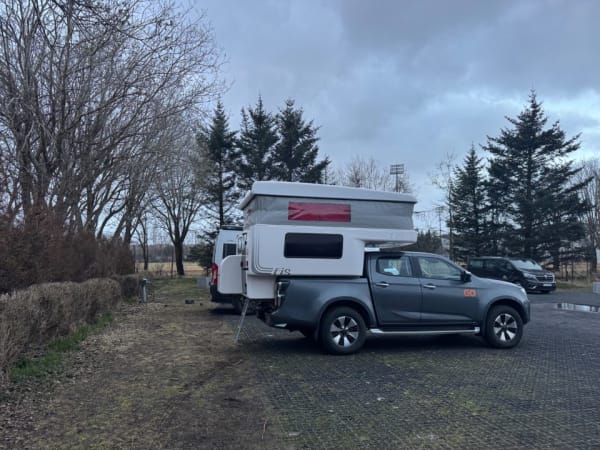
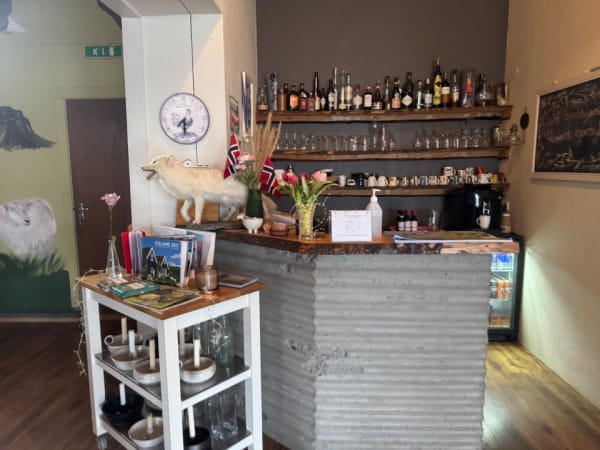
Some campsites we visited during our trip that we can recommend:
Activities
Iceland has countless free natural attractions - but some of the best experiences cost money. Here are the most important ones with real prices.
Hot springs
Blue Lagoon: around 72 euros per person - the most famous spot, but also the most expensive
Secret Lagoon: around 30 euros per person - simpler, just as relaxing (we visited it and can totally recommend it!)
Mývatn Nature Baths: around 50 euros per person, up in the north
Local municipal pools: 5 to 10 euros per person - the cheapest option and the most authentic local experience

Puffin watching - free instead of 100 to 150 euros
Many operators sell puffin watching tours for 100 to 150 euros per person. You do not need them. From late April onwards you can watch puffins completely for free - for example at Hafnarhólmi near Borgarfjörður Eystri in the Eastfjords. The birds nest right next to the car park and you can watch them from just a few metres away. We spotted the first puffins of the season there - one of the most memorable moments of the entire trip.


Boat or kayak on Jökulsárlón Glacier Lagoon
Jökulsárlón is one of the most spectacular experiences on the entire Ring Road - and you have several ways to get out on the water:
Kayak: around 130 euros per person - you paddle directly among the icebergs at your own pace, close to the water. Tours start from May.
Amphibious boat: around 54 euros per person, children aged 6 to 12 around 26 euros, children under 6 travel free. The trip lasts around 30 to 40 minutes and is the most relaxed way to explore the lagoon - great for families.
Zodiac boat: from around 97 euros per person. Faster and more exciting than the amphibious boat, getting you closer to the icebergs. The tour lasts about an hour and is better suited for those after more of an adventure.
If you are watching your budget: the amphibious boat offers the best balance of price and experience.
If you want something truly unforgettable and do not mind the physical effort: go for the kayak (we totally recommend it!!)


More activities
Diving or snorkelling at Silfra (Þingvellir): around 150 to 200 euros per person - you dive between the Eurasian and North American tectonic plates with visibility of up to 100 metres
Whale watching: 50 to 100 euros per person from Reykjavík, more expensive from Húsavík - Húsavík is considered the best base for sightings
Glacier hiking: 80 to 150 euros per person with guide and equipment, for example on Sólheimajökull
Snowmobiling: 100 to 200 euros per person, often on the Langjökull glacier
Inside the volcano (Þríhnúkagígur): over 300 euros per person - unique in the world, but a clear luxury experience

Parking fees along the Ring Road
Most natural attractions are free to visit, but many now charge parking fees. Here is a realistic overview:
Smaller waterfalls and quieter spots: 2 to 3 euros
Skógafoss, Seljalandsfoss: around 7 to 8 euros
Þingvellir National Park: around 7 to 10 euros
Reynisfjara black sand beach: around 5 to 7 euros
Jökulsárlón: free parking, but activities cost extra
For a 10-day trip with 10 to 15 stops, budget around 30 to 100 euros just for parking fees.


Conclusion: how to keep Iceland affordable
Iceland does not have to be expensive - if you know where to save. Travelling in spring instead of summer, cooking in the well-equipped campsite kitchens, refilling tap water instead of buying bottles, watching puffins for free at Hafnarhólmi instead of booking expensive tours - none of these are big sacrifices, they are simply the smarter choices.
Use StayFree to find open campsites with kitchens, showers and grey water disposal along your route - and focus your activity budget on one or two things you genuinely want to experience. The rest of Iceland costs you nothing.
FAQ
How do I find open campsites in Iceland?
This is especially important in spring, when not all campsites have reopened after winter. StayFree lists campsites across Iceland with photos, facilities details, opening status and information on whether they have sump stations for grey water disposal - so you always know what to expect before you arrive.
Is the tap water in Iceland safe to drink?
Yes - Iceland's tap water is among the cleanest in the world. You can refill your water tank and bottles at every campsite for free. There is no need to buy plastic bottles at any point during your trip.
How long does it take to drive the Ring Road?
The Ring Road is around 1,300 km long. You need at least 7 days to drive it without constantly rushing - 8 to 10 days is the sweet spot. With fewer days it is better to focus on one region rather than trying to cover the whole loop.
Can I see puffins for free in Iceland?
Yes. Skip the organised tours (100 to 150 euros per person) and head to Hafnarhólmi near Borgarfjörður Eystri in the Eastfjords from late April onwards. The puffins nest right next to the car park and you can watch them from just a few metres away at no cost.


.png)