
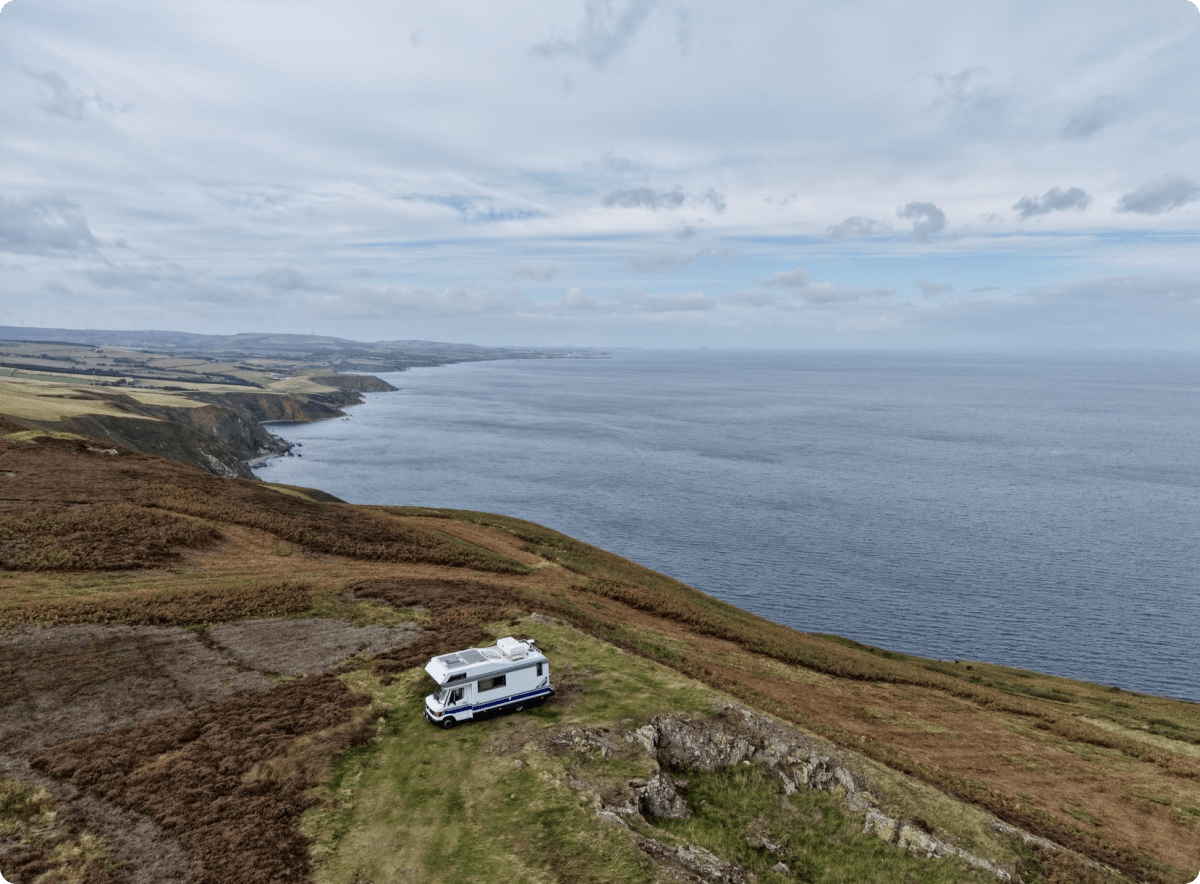
What is the NC500 - and why is it special for vanlifers?
The North Coast 500 - NC500 - is a 516-mile coastal route through the Scottish Highlands. It starts and ends in Inverness, loops around the far north of Scotland and is widely regarded as one of the most spectacular drives in Europe. Sometimes called "Scotland's answer to Route 66" - which sounds a little grandiose until you actually drive it.
For vanlifers the NC500 is in a category of its own for one simple reason: the route is literally made for slow driving, stopping, staring and sleeping in nature. There is no way to rush it without missing everything it is famous for. Every kilometre rewards you with a view worth pulling over for.
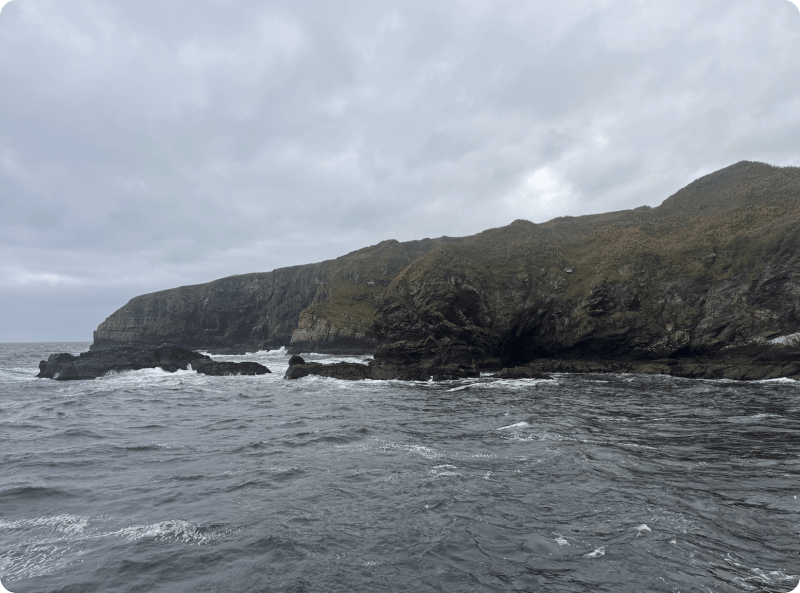
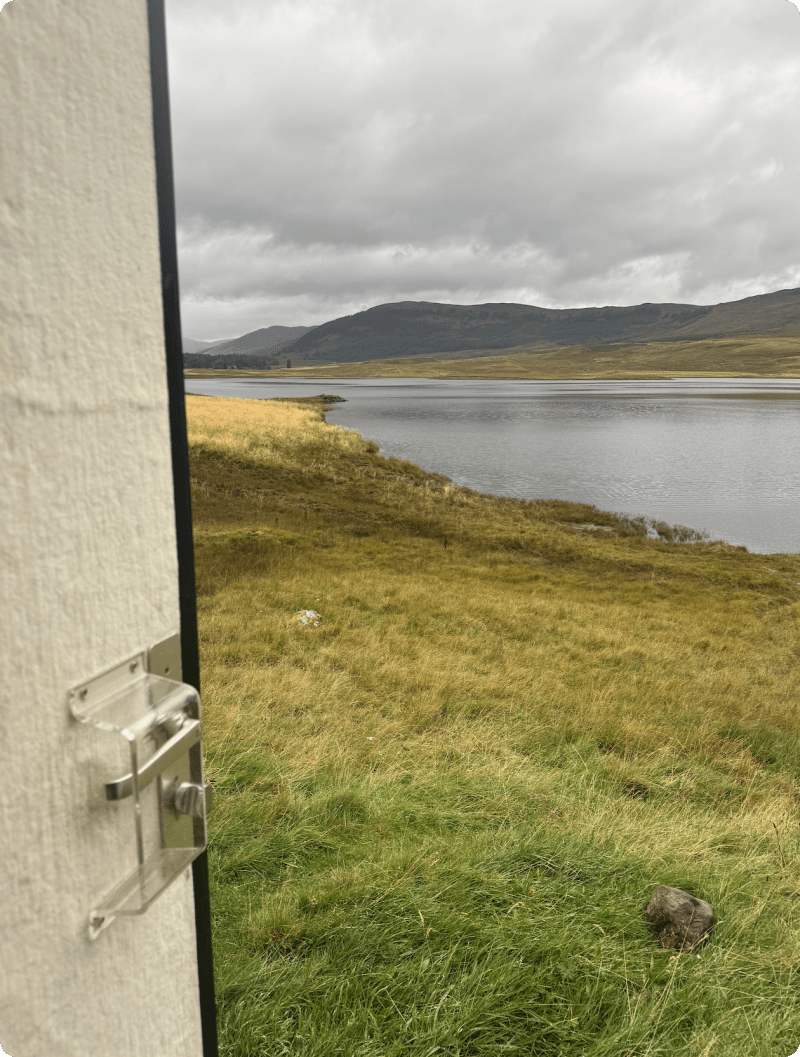
Turquoise bays that look like the Caribbean but are somehow in Scotland. Castle ruins perched on clifftops above the Atlantic. Lonely lochs reflecting mountains. Beaches where there is nobody except you and a few sheep. Distilleries that have been making whisky in remote glens for centuries.
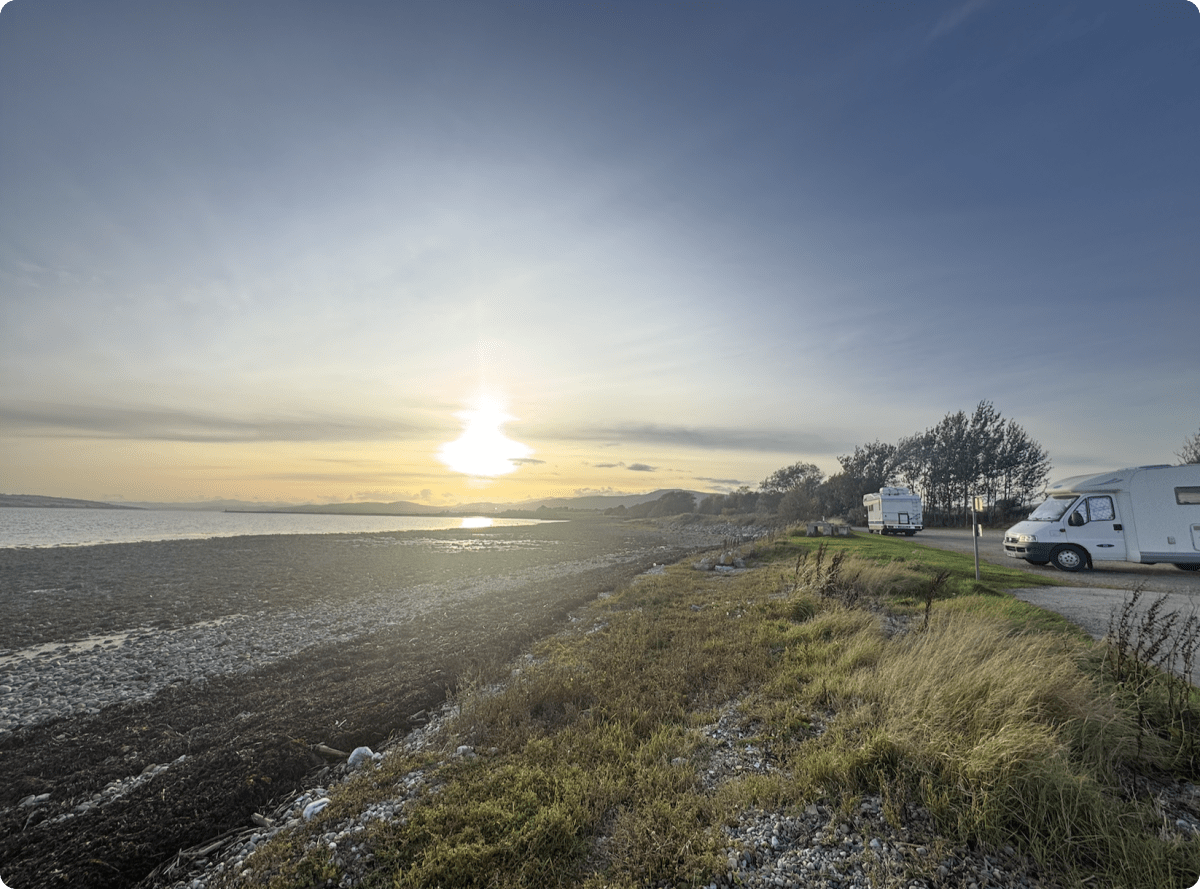
Wild camping is tolerated
Camping in the sense of tents, fires, groups and extended stays is considerably more restricted at many popular spots along the NC500 - particularly following the Loch Lomond & Trossachs Camping Management Scheme which regulates certain well-known areas.
For campervan travellers in practice: parking discreetly at a beautiful spot, staying one night and moving on works very well along the NC500. Setting up a full camp, pitching tents, lighting fires and staying for days - that is a different matter and is watched much more critically.
With StayFree you find community-reviewed spots along the entire NC500 - with current reviews, photos and notes on whether wild camping at a specific location is actually practical.
Legal and smart alternatives to off grid camping
To protect the nature and local communities you should mix wild camping with official options. Here are the best systems that work along the NC500:
Highland Campervan & Motorhome Scheme
The Highland Council offers a ticket system. For a fee you get access to designated overnight spots - and what is particularly valuable: access to showers at local leisure centres, for example in Thurso or Ullapool. After a few nights wild camping in the wilderness, a hot shower is not a small thing.
Forestry and Land Scotland - "Stay the Night"
The Scottish forestry authority allows campervans to park legally at certain forest car parks during the summer months for a very small fee per night. Simple, affordable, legal - and often in stunning surroundings.
Official campsites every few days
Planning an official campsite every three to four days is not a compromise - it is smart. You get electricity for charging, water, waste disposal and usually a hot shower. Many campsites along the NC500 are in extraordinary locations. Sango Sands Oasis in Durness sits directly above the white sand dunes of Sango Bay - that is not a compromise, that is a highlight.
StayFree StayFree app shows you all this places - campsites, wild camping spots and designated pitches along your route - with photos, reviews and facilities info. Particularly on the NC500 where spot availability varies enormously, this is invaluable.
When is the best time for the NC500?
May and June - our first recommendation
The best combination of everything: long days with up to 17 hours of daylight, nature in full spring colour, almost no midges, significantly fewer tourists than in midsummer and campsites that are not yet packed. If you only have one window - take May or June.
September - our second recommendation
Autumn turns the Highlands into a sea of orange, red and gold. The tourist crowds have gone, campsites are quiet, prices drop - and the chances of seeing the Northern Lights increase. From September to March the Northern Lights are most likely to be visible in Scotland. Waking up in your van, Milky Way above the loch, perhaps the first green streaks across the sky - that is the NC500 on another level entirely.
July and August - beautiful but busy
Peak season. The NC500 is famous, and you feel it. Popular spots are crowded. Midges are a genuine issue - bring repellent, seriously. Campsites should be booked in advance where possible. It is still stunning - but you will not have the route to yourself.
March and April - for adventurers
Still quiet, still affordable, Northern Lights still possible. Weather is unpredictable - snow in the mountains is entirely possible in March. But those who can handle it get an NC500 that feels like a personal discovery.
The route: clockwise or anticlockwise?
The official start point of the NC500 is Inverness Castle - a beautiful starting point with the River Ness tumbling below it.
Our recommendation: anticlockwise
The reason is simple: the Bealach na Bà - the famous mountain pass to Applecross with its hairpin bends and the steepest ascent in Britain - comes at the end of your trip if you drive anticlockwise. By then you have experience with narrow Scottish roads, you know your vehicle and you are ready for the biggest challenge of the route.
Driving clockwise you reach the Bealach na Bà within the first 70 miles - before you have found your rhythm. Not a problem for experienced drivers, but for everyone else: anticlockwise makes life considerably easier.

The NC500 highlights for vanlifers
The east coast towards John O'Groats
Less dramatic than the west - but do not underestimate it. Historic whisky distilleries invite visits. The cliffs around Wick with the ruins of Keiss Castle and Castle Sinclair Girnigoe are impressive.
John O'Groats - the northeastern tip of Great Britain - is touristy but the iconic sign is non-negotiable. Duncansby Head with its sea stacks is worth the short walk.
Thurso and the north coast - Dunnet Head is the northernmost point of the British mainland - on a clear day you can see across to the Orkney Islands. Near Thurso is Puffin Cove - in spring and early summer thousands of puffins nest here.
Durness - plan two days here
Durness is for many the highlight of the entire route. The Smoo Cave - a vast sea cave with a waterfall inside, once used by Vikings - is unique. Sango Sands Beach, Durness Beach, the views over the Atlantic. You will want to stay longer than planned.
For vanlifers: Sango Sands Oasis campsite sits directly above the dunes - one of the most beautiful campsite locations in all of Scotland.
Cape Wrath - The wildest corner of Scotland. The far northwest tip is only reachable by ferry and organised minibus - but Sandwood Bay, one of the most remote and arguably most beautiful beaches in Britain, is the absolute highlight for those willing to walk a few miles.
Can you add the Isle of Skye to the NC500?
The Isle of Skye is not part of the official NC500 route - but it sits close enough that it would be almost irresponsible not to visit if you are already there.
Skye is accessible via the Skye Bridge (free) and offers with the Old Man of Storr, the Fairy Glen, the Quiraing and the Fairy Pools landscapes that look like they come from a fantasy film. For vanlifers Skye is extraordinary - but plan at least two to three extra days. One day is not enough.
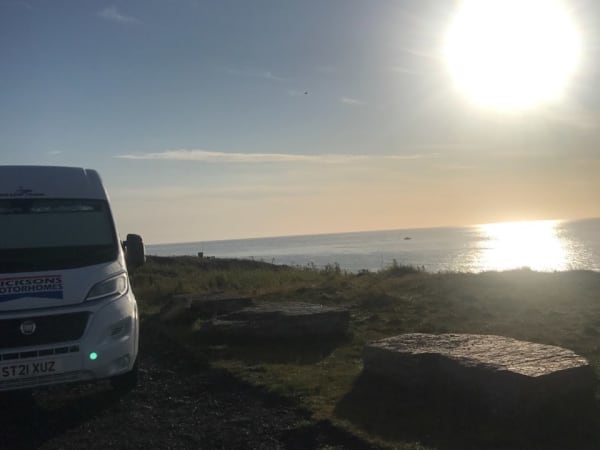
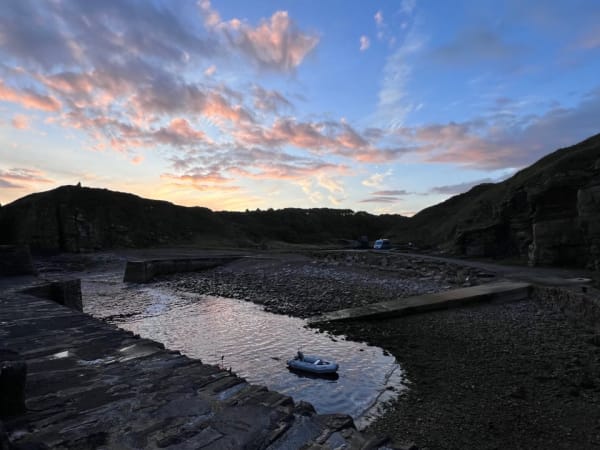
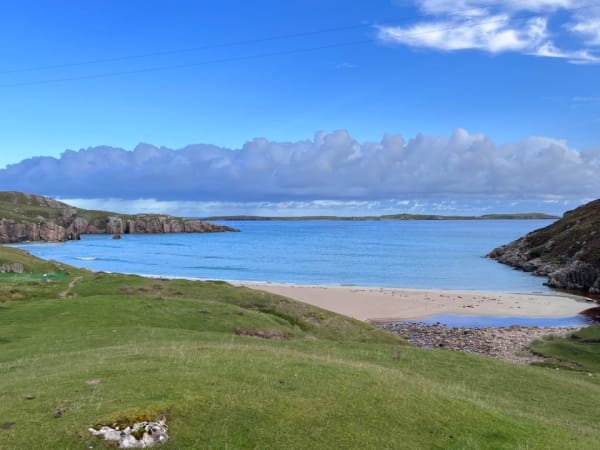
Some spots on NC500 in StayFree:
Practical vanlife tips for the NC500
Single track roads
The vast majority of the NC500 is single track with passing places. If you see an oncoming vehicle, pull into the next passing place on your side and wait. If a vehicle behind is catching up and you are driving slowly - pull over and let them pass. This is not weakness, it is courtesy on Scottish roads.
Fuel
In the remote sections of the west coast petrol stations are far apart. Fill up every time you see one - never drive through the west coast with less than half a tank.
Midges
From May to September, midges are real. Tiny, barely visible, extremely irritating insects that swarm in calm, windless conditions. Repellent and a good mosquito net for the van are essential. Wind is their enemy - at exposed coastal spots they are not a problem.
Water
Fresh water is well available along the NC500 - in towns, at campsites and often at natural springs. Scottish spring water is generally clean and drinkable.
Phone signal
Signal exists in towns and along main roads. In valleys, fjords and remote coastal sections - no signal. This is part of the experience and honestly one of the best things about the route. Download your StayFree maps before heading into remote sections.
Northern Lights
September to March. Dark, clear skies far from light pollution - the NC500 is one of the best places in Britain to see the aurora. Activate aurora alerts on your weather app before you go.
A proper rain and wind jacket
This is not optional. Scotland's weather changes fast and the wind on exposed headlands and cliff tops is serious. A cheap rain jacket will not cut it, bring something genuinely windproof and waterproof. You will thank yourself every single day.
Check the ground before you park for the night
Scotland's moorland and grass verges can look solid but hide soft, boggy ground underneath - especially after rain. Before committing to a spot, get out and test the ground on foot. A van stuck in a Scottish bog at midnight is a situation you do not want to be in.
Check wind direction when choosing your overnight spot
The NC500 is exposed and wind at night can be fierce - particularly on the north and west coast. Before settling in for the night, check which direction the wind is coming from and park accordingly. A hillside, hedgerow or building as a windbreak makes the difference between a comfortable night and a sleepless one. The weather app is your friend - but your eyes and instincts matter more once you are on the ground.
Conclusion: the NC500 is made for vanlifers
There are routes you drive. And there are routes you experience.
The NC500 belongs to the second category - and it is made for vanlifers in a way that no other style of travel can replicate. You can wake up on a beach that no bus or taxi reaches. You can watch dolphins over breakfast. You can have a dram in a distillery that has been standing in a remote valley for two hundred years.
Drive slowly. Stop more than you planned. Use StayFree to find the spots that are not in every guidebook. And give the route the time it deserves.
FAQ
Is the NC500 suitable for large motorhomes?
Yes - but with caveats. Single track roads require patience and care. The Bealach na Bà to Applecross is a challenge in very large vehicles. A more compact van is significantly more relaxed on the NC500 than a large motorhome.
When is the best time for the NC500?
May, June and September. Long daylight, few midges, fewer tourists than July and August. Autumn for Northern Lights and colours. Winter for adventurers seeking silence.
How can I find the best spots on NC500?
StayFree is the best tool for this. The app lists wild camping spots, campsites and overnight locations along the entire NC500 route - with photos, community reviews and satellite view so you know what to expect before you arrive. Particularly useful on the NC500 where the difference between a spectacular spot and a disappointing one can be a single kilometre. Download the app, search your next section of the route and read what other vanlifers have actually experienced there. Many of the best spots on the NC500 are not in any guidebook - they are in StayFree.



.png)