


The Pan-American Highway
The Pan-American Highway is considered the ultimate vanlife adventure. It is the longest continuous road system on Earth, stretching across two continents and connecting some of the most diverse landscapes, cultures, and climates the planet has to offer.
In total, the Pan-American Highway spans approximately 30,000 kilometers (about 19,000 miles), running from Prudhoe Bay, Alaska, in the far north of North America, all the way to Ushuaia, Argentina, at the southern tip of South America. While the officially recognized start of the Pan-American Highway is in Laredo, Texas, at the U.S.–Mexico border, most overlanders choose to begin much farther north to experience the full length of the American continents.
What makes the Pan-American Highway so unique is not just its length, but its incredible variety. Along this single route, travelers pass through five climate zones, cross the equator, and experience everything from Arctic tundra and vast deserts to tropical rainforests, high mountain ranges, and wild southern coastlines. No other road in the world offers such a concentration of contrasts.
For vanlifers and overlanders, the Pan-American Highway represents the purest form of long-term travel freedom. It combines endless open roads with remote wilderness, vibrant cities, and deeply different cultures—often changing within just a few days of driving. Distances are vast, progress is slow, and conditions are not always easy, but that is exactly what makes the journey so special.
The Pan-American Highway is not about reaching a destination quickly. It is about time, flexibility, and curiosity. It is a journey where detours become highlights, plans constantly evolve, and every border crossing feels like entering a new world. For many, it is not just a road trip—but the adventure of a lifetime.
Shipping the Pan-American Highway
To explore the Pan-American Highway with your own vehicle, the trip inevitably begins with a sea crossing to one of the American continents. The first decision to make is whether you want to start in North, Central, or South America.
There are generally two options for shipping your vehicle overseas: RoRo (Roll-on/Roll-off) and container transport, or flat rack, which is mainly used for larger vehicles and trucks.
With the RoRo method, the road-ready vehicle is driven directly onto the ship and unloaded again at the destination port. You hand over your fully packed vehicle (excluding prohibited items) at the port and leave the key inside. In the middle of a huge port where thousands of people walk around every day. It’s a strange feeling - especially right at the start of the journey.
With RoRo shipping, routes are not freely selectable. In North America, common destinations are Halifax in Canada and Baltimore in the USA. San Francisco is also an option if you want to start directly on the West Coast, but prices there are significantly higher. Other possible destinations include Veracruz in Mexico and Montevideo in Uruguay.
The departure port in Europe is almost always Hamburg, with Antwerp or Liverpool as alternatives.
Container transport, on the other hand, offers much greater flexibility in route selection and allows multiple vehicles to be shipped together in one container, making it possible to share costs. In addition, the vehicle is locked and sealed inside the container, making theft nearly impossible.
Routes between Europe and North America are considered very safe, and theft from vehicles is extremely rare. The situation is different on routes to and from South America.

Financial damage is covered by marine cargo insurance, which is often offered directly by the shipping company or can be taken out separately—for example through Fidarsi for around 600 euros. This insurance is not mandatory but is strongly recommended. In the event of an accident (maritime casualty), a so-called General Average can be declared, meaning all parties involved share the salvage costs proportionally - sums that can quickly reach the millions.
The pure sea transit time is relatively short. The Antwerp–Halifax route takes about eleven days by RoRo, the crossing from Panama (Colón) to Colombia (Cartagena) around seven days, and shipping from Montevideo to Hamburg approximately 30 days.
All of this may sound complicated at first, but thanks to specialized companies, it really isn’t.
For overlanders, both German and international companies are available. Well-known German providers include Seabridge , which exclusively offers RoRo, as well as Caravanshippers and Overlandershipping, which organize both RoRo and container transport. Internationally, established companies include Overlander Embassy based in Panama City and IVSS from the UK. All of them have many years of experience with vehicle shipping and very friendly, competent staff.
Organizing an international shipment on your own to save money is not worthwhile, as importing and exporting foreign vehicles is far from straightforward. Customs clearance is handled by local customs agents for all providers. As a vehicle owner, your task is limited to handing over the vehicle and providing the required documents. The entire process is very uncomplicated and reliable, even internationally. The companies ensure that everything runs smoothly.
We personally had no issues with customs, although random inspections can occur, during which the entire vehicle may be searched.
Shipping costs depend mainly on vehicle size, route, and transport method. A RoRo shipment from Antwerp to Halifax costs around 3,000 euros for a 4x4, for example. Container shipping is significantly more expensive but offers more flexibility. For a container from Uruguay to Germany, you should expect around 6,000 euros on average. These costs can be shared if multiple vehicles are shipped together in one container.
The intermediate shipment between Panama and Colombia, which is necessary for Pan-American travelers, is usually done by container as well, since RoRo ships often depart only once a month. Expect costs of around 5,000 euros here, again shareable among multiple vehicles.
It’s worth looking for container buddies in dedicated Pan-American travel groups to reduce both costs and effort. There’s almost always someone shipping around the same time. We always found our container buddies this way.
For shipping, you typically need the vehicle registration, passport, and proof of insurance. For Canada, vehicle insurance must be arranged independently, while in Colombia it is usually taken out directly on site through the responsible agent. The agents will tell you exactly what is required well in advance.
❗️ Before handing over the vehicle, thorough preparation is essential. The vehicle must be fully packed, prohibited items removed, and a deep cleaning is mandatory. For safety reasons, the fuel tank may only be filled to reserve level.
Prohibited items include, among others:
- Gas bottles - Gasoline or diesel (except in the vehicle’s fuel tank) - Food - Plants - Animals - Weapons - Drugs and prescription medication - Dutiable goods - Lithium batteries (e.g. from e-bikes) - Flammable or combustible liquids (e.g. deodorant) - Valuables (not prohibited, but strongly discouraged)

Ship schedules are usually published a maximum of three months in advance.
From that point on, shipping can be booked. For container transport, it may be worthwhile to actively search for a container buddy to share costs. About one week before shipment, all documents must be submitted, and around three days before departure, the vehicle is delivered to the port.
Procedures vary by port: in Panama, for example, a police inspection is required beforehand, while in Antwerp no inspection takes place in the presence of the vehicle owner.
Payment is usually made only after the ship has departed. Deposits may be required, but typically not more than 10%. Many shipping companies provide a tracker to follow the transport; alternatively, ships can be tracked via services like vesselfinder.com.
After arrival at the destination port, the vehicle is cleared through customs, any applicable fees are paid, and the vehicle is released—allowing the journey to continue immediately. Overall, you should plan an additional five to seven days of time before and after shipping for organization.
Planning the Pan-American Highway
The Pan-American Highway is a more or less defined route, but it can be customized individually. Many travelers begin their journey on the east coast of Canada or the USA and move westward, as the classic course of the Pan-American Highway largely follows the west coast of the American continent. That’s exactly how we did it.
Commonly mentioned starting points in the far north are Prudhoe Bay or Fairbanks in Alaska, while the symbolic end of the journey is Ushuaia, Argentina. However, the officially recognized starting point of the Pan-American Highway is in Laredo, Texas, at the border with Mexico.
Due to shipping logistics, this exact route is rarely feasible, as the overall journey usually starts and ends on the Atlantic side, where shipping costs are significantly lower.
Along the route, overlanders encounter an enormous variety of landscapes, cities, cultures, and highlights. Which regions are visited and how intensively individual countries are explored depends heavily on personal interests and available travel time. The Pan-American Highway offers urban metropolises as well as remote wilderness, high mountain ranges, deserts, rainforests, and coastal landscapes - an unmatched diversity.
When planning travel time, the vast distances in North America must be considered, as well as sometimes poor road conditions in Central and South America. Fuel and supply stops need to be planned carefully; it can happen that there is no gas station or supermarket for several days.
Progress is much slower than in Europe - but slow is not a disadvantage here. Around every corner, a new highlight awaits, whether it’s a breathtaking mountain landscape, wild animals, or a roadside taco stand. Keeping your eyes open always pays off.

A key aspect of planning is crossing five climate zones as well as the equator. This brings constant changes in seasons, which should be taken into account when planning route and timing. Different weather conditions and extremes can shape the journey. In parts of South America, heavy rainy seasons can cause landslides and make roads impassable. In Central America, periods of extreme heat and high humidity are common, while Patagonia is known for strong winds and sudden storms. (The yellow line marks the equator.)

What may sound complicated and dangerous at first largely depends on the length of the trip. Those camper traveling for several months or years can react flexibly and take detours or breaks to avoid extreme weather conditions. We found, however, that less-than-ideal conditions often turn out to be the best ones. For example, winter in Patagonia can have surprising advantages: less wind, very few other travelers, and an impressive, almost deserted landscape. In summer, on the other hand, strong winds and significantly higher crowds are common.
What matters most is not perfect planning, but awareness of the circumstances and potential natural hazards. Those who travel informed, adapt to conditions, and realistically assess situations on the ground can safely manage even challenging environments. Ultimately, flexibility, optimism, and courage are among the most important companions on the Pan-American Highway—often more important than even the most meticulous route planning.

In StayFree App you can see all 289 spots along the route that Marcel and Rebecca slept on during their 14-month road trip through Panamerican Highway: Open the app .
Spot Highlights
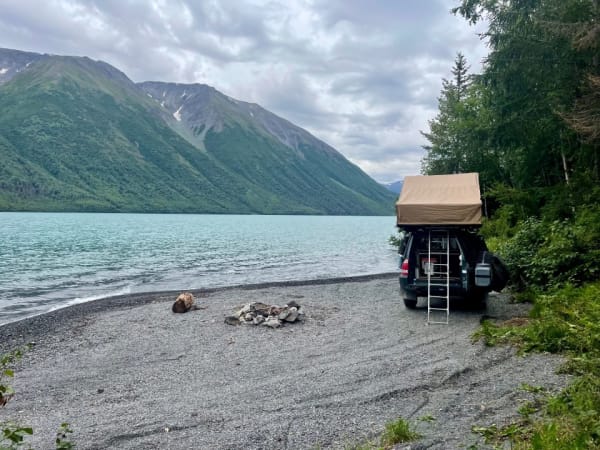
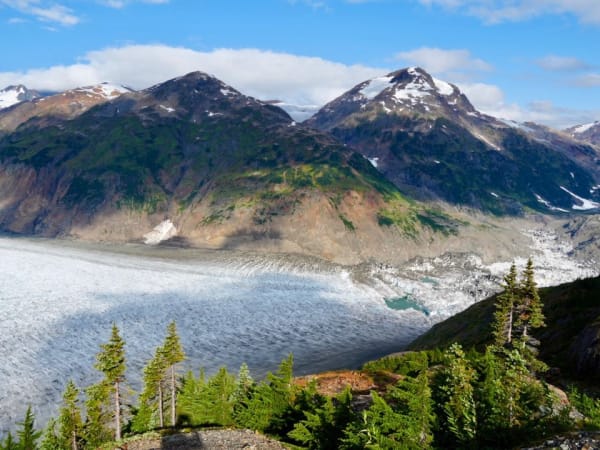
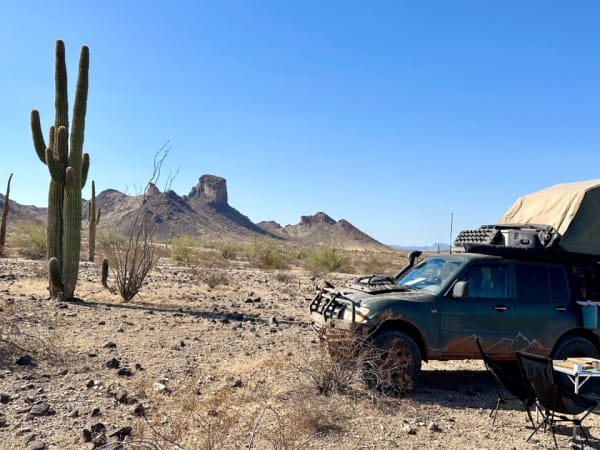
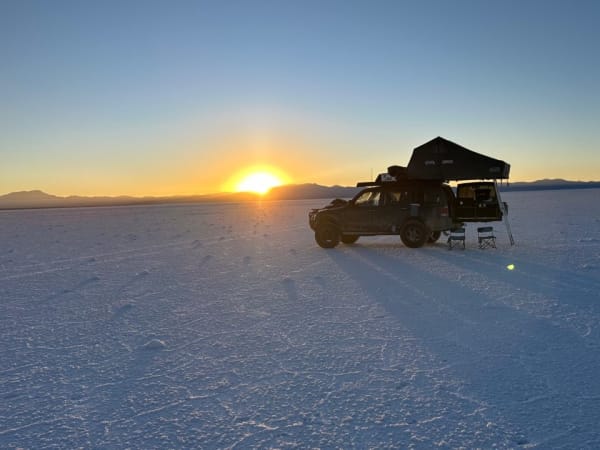
Tools and Apps you need
For finding campsites and overnight spots, StayFree and iOverlander are among the most important tools. Both apps offer extensive collections of campsites, service points, and recent traveler reports. Especially in remote regions, they provide valuable information, but they do not replace your own assessment of the situation on site.
CampPilot helps plan destinations, sights, attractions or potential overnight spots in advance. Google Maps is one of the central tools for navigation. Offline maps allow orientation without mobile reception, while saved locations Google Maps is also excellent for finding supermarkets, gas stations, workshops, or medical services along the route.
In the USA, additional specialized apps are useful. Through Recreation.gov, many state-run campsites and park entry tickets can be booked in advance. The NPS App (National Park Service) provides detailed information on national parks, hiking trails, and current conditions.
Instagram serves many travelers as a source of inspiration and a way to connect with other overlanders, while Facebook groups enable active exchanges about current routes, border situations, or local conditions.
For communication on the road, translation apps such as DeepL or Google Translate are extremely helpful - whether dealing with authorities, visiting workshops, or in everyday life. Especially in countries with limited English proficiency, they greatly facilitate interaction with locals.
That said, language skills are definitely an advantage. Along the Pan-American Highway, there are really only two languages you need: English (which almost everyone speaks anyway) and Spanish. You’ll get much further asking for help in Spanish than by simply holding your phone with a translation app in someone’s face. And by the way: don’t be afraid of making mistakes - Latin Americans are incredibly friendly and will do their best to understand even very broken Spanish.

If you plan to hike a lot, hiking apps or maps are essential. AllTrails offers a wide selection of hiking routes with elevation profiles, difficulty ratings, and user reviews. Routes can also be downloaded in advance and used offline. Komoot or other European hiking apps usually offer fewer routes and are therefore not suitable as the sole navigation tool.
For off-road routes and detailed navigation away from paved roads, Gaia GPS has proven to be a reliable tool. Here too, it’s essential to download planned sections offline in advance—otherwise you may find yourself truly stuck in the middle of nowhere.
Despite all apps and online research, one thing remains indispensable: first-hand information. Conversations with other travelers, advice from locals, or even road signs often provide more current and realistic assessments than any app—especially when it comes to road conditions, weather, or regional specifics.
A reliable weather app is also essential. Services like AccuWeather provide not only forecasts but also information on the UV index, which is particularly important near the equator. Knowing about upcoming weather changes can be crucial for minimizing risks and continuing the journey safely and relaxed.

Insurance
Insurance plays a central role in a Pan-American trip and should be clarified early on. The foundation for everything else is a valid vehicle insurance policy in the country where the vehicle is registered. This insurance is required for legal registration in Europe and is, in turn, essential for officially importing the vehicle into other countries. Without proper registration and insurance in the home country, international travel with your own vehicle is generally not possible.
For the USA and Canada, there are only a few insurance providers available for foreign vehicles. Essentially, two insurers are relevant: THUM and Intersecure (formerly SeguroGringo) (segurogringo.com). THUM insures only “classic” motorhomes with permanently installed bathrooms and kitchens, which excludes many converted campers or off-road vehicles. Intersecure, on the other hand, offers liability insurance for almost all vehicle types and is therefore the more practical solution for most Pan-American travelers. However, it’s important to note that both providers offer liability insurance only.
From Mexico onward, the situation becomes much more flexible. Vehicle insurance can usually be arranged individually, either directly at the border or online in advance. In some countries - such as Guatemala, El Salvador, or Honduras - insurance is not strictly mandatory. For the Mercosur countries in South America, it is also possible to cover multiple countries with a single insurance policy, significantly reducing administrative effort.

Insurance certificates can look quite adventurous - such as the insurance for Nicaragua, which costs just 12 USD and is valid for one month. It was sold in a roadside restaurant immediately after the border. Conveniently, you can have lunch while the insurance certificate is being filled out. Fortunately, we never had to test how reliable these policies actually are.
Those who want additional coverage can take out worldwide comprehensive insurance through providers such as Fidarsi. Costs depend on vehicle value and planned travel duration and vary widely. This option is particularly attractive for newer or higher-value vehicles.
In parallel, it’s worth asking your German vehicle insurer about suspending or refunding premiums during the time abroad. Some insurers—such as Allianz—refund part of the premium upon request if proof is provided that the vehicle is permanently outside Europe. Regulations vary by provider and should be clarified individually.
In addition to vehicle insurance, personal insurance is an essential part of travel planning. Long-term international health insurance is indispensable. Providers like ADAC are particularly attractive for travelers under 27, as special youth tariffs often apply and the otherwise expensive regions of the USA and Canada are not charged separately. Costs are roughly half compared to other insurers, especially if you are an ADAC member (https://www.adac.de).
Alternatively, HanseMerkur, Ergo, and all statutory health insurance providers offer long-term international policies. Costs usually range between 90 and 100 euros per month per person, depending on age and coverage.
Supplementary accident insurance can also be useful, especially when traveling in remote regions or engaging in activities such as hiking, climbing, or off-road driving. It is important to clarify in advance which activities are covered and where exclusions apply. Clear communication with the insurer is essential to avoid unpleasant surprises in case of an emergency.

About the Author
Rebecca, the creator of RUMs Adventure (rumsadventure.com), is an overlander who has driven the entire Pan-American Highway from Alaska to Tierra del Fuego in her 4x4, sharing life on the road, off-road experiences, and vanlife inspiration.


.png)