

The Ground: The Decision That Comes Before Everything Else
Finding the Right Spot - and Checking for Rooftop Tent Suitability
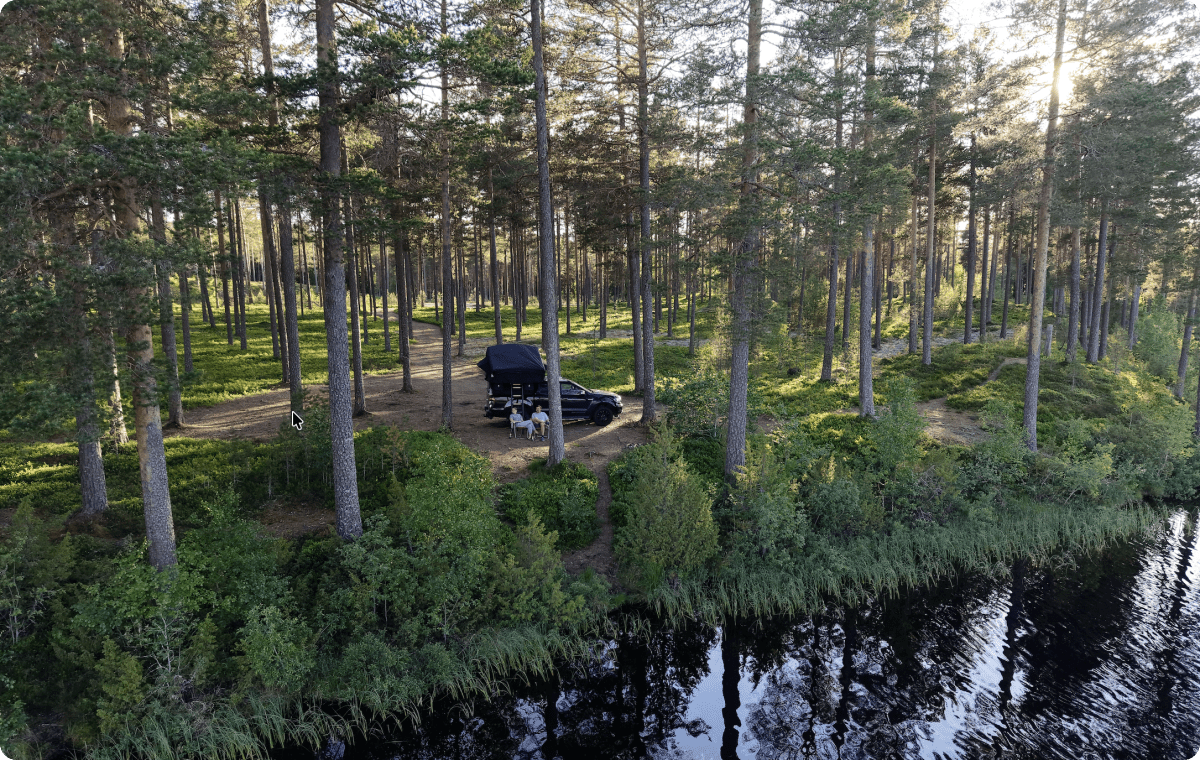
Wind: When It Becomes Annoying - and When It Becomes Dangerous

Thunderstorms: The One Situation Where You Leave the Tent Immediately

Heavy Rain: When You Drive Instead of Wait
Pack Up Ready: Always Sleep Departure-Ready

The Checklist: What Gets Checked Before Every Night
FAQ
Is a rooftop tent safe in a thunderstorm?
No - a rooftop tent doesn't form a Faraday cage and offers no protection from lightning. When a thunderstorm builds, leave the tent immediately and get into the closed vehicle, shut all windows and doors, and don't touch any metal parts. The car's metal bodywork provides the protection needed. To gauge distance: seconds between lightning and thunder multiplied by 343 gives the distance in metres.
Up to what wind strength is a rooftop tent safe?
Rooftop tents are generally reliable up to around wind force 5–6. From wind force 7 or with strong gusts: close the tent and sleep in the vehicle. Align the vehicle into the wind, roll in any awning, stow all loose items. Don't park under trees or at woodland edges — broken branches in wind are a serious hazard.
How do I find rooftop tent-friendly spots?
In StayFree you can filter specifically for rooftop tent-friendly locations. The filter shows spots that are explicitly suitable for vehicles with a raised setup - no low-clearance entrances, no covered areas, enough space for the open tent and extended ladder. Community reviews from other rooftop tent travelers add real-world detail on ground quality, tree coverage and noise levels. The built-in satellite view lets you assess the spot visually before you drive there.



.png)