

Sweden is often seen as the ultimate wild camping destination — and in many ways, it truly is. The country is vast, sparsely populated, and deeply connected to nature. If you travel with awareness and respect, finding a quiet place to stay overnight is usually not difficult.
Sweden’s famous Allemansrätten (Right of Public Access) gives people wide freedom to enjoy nature. It’s important to know that this right is designed for people on foot, not for cars. That said, Sweden is so large and open that overnight parking in quiet places is often accepted in practice, especially when done discreetly.
The key difference is not about strict rules — it’s about how and where you stop.
What generally works well:
Staying one night only
Parking quietly without setting up camp
Choosing remote or low-density areas
Traveling outside peak season
What usually causes problems:
National parks and protected areas
Popular coastal spots in summer
Busy southern regions with high population density
Staying multiple nights or spreading out with chairs and gear
In northern and inland Sweden, space is rarely an issue. Long roads, forests, lakes, and small communities mean that a single van stopping overnight hardly stands out at all. In the south — especially during summer — things are tighter, and authorities are more sensitive to overnight stays, particularly near beaches and tourist areas.
Lägerplats — Sweden’s legal “wild camping” solution
Sweden offers something unique: Lägerplats.
These are officially approved, nature-based overnight spots — often near lakes, forests, or hiking routes. They are not campsites and not wild camping in the classic sense, but something in between.
Typical Lägerplats:
Natural setting, minimal infrastructure
Sometimes a compost toilet or fire ring
Small fee (usually €5–10), paid via QR code
One night stay, leave no trace
They exist because Sweden wants people to enjoy nature without damaging it.
For vanlifers, they’re one of the best ways to experience Sweden legally and peacefully.
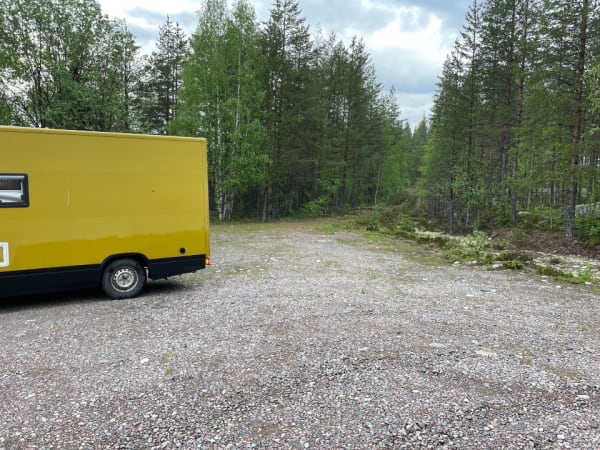
When is the best time to wild camp in Sweden?
May to September is the sweet spot.
Late spring: light returns, nature wakes up
Summer: endless daylight, midnight sun in the north
Early autumn: quiet, golden, and calm
Winter is stunning — but difficult. Icy roads, short days, frozen water systems, and closed service points make spontaneous overnighting challenging.


Weather, ground & fire - things that matter here
Sweden’s nature is like a dream — until it isn’t.
Wet ground can swallow vehicles fast
Fire bans in summer are serious and strictly enforced
Mosquitoes near lakes can be intense in early summer
Coastal winds can make exposed spots uncomfortable
Swedes protect nature fiercely. Respect that, and you’ll be respected back.
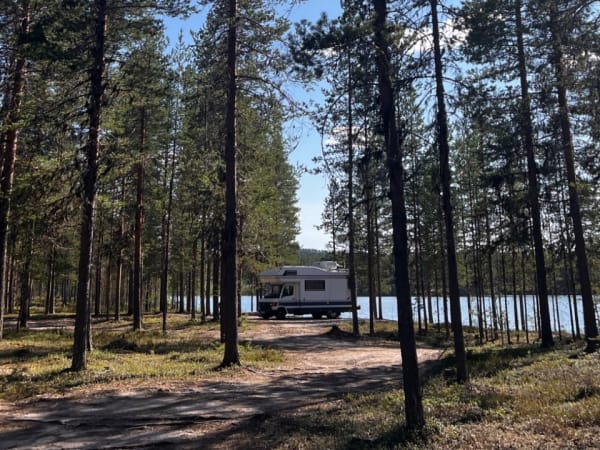
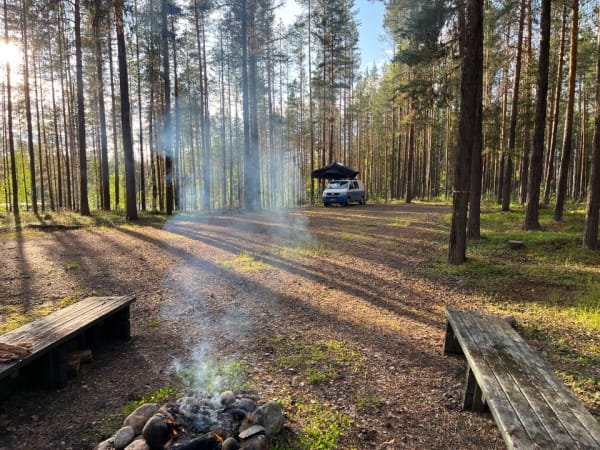
North vs. South — where freedom really feels free
Northern Sweden (Norrland) Big distances, few people, lots of space. Parking responsibly here is often easy and quiet.
Southern Sweden More people, more tourism, more restrictions — especially in summer. Coastal areas and nature reserves are closely monitored.
Best strategy:
Avoid peak season
Stay inland
Use Lägerplats or official motorhome areas
Is it safe to overnight in Sweden?
Very. Sweden is one of the safest countries in Europe for vanlife.
Best places to sleep:
Small towns
Rural parking areas
Lakeside gravel spots
Designated nature parkings
Avoid sleeping in big cities. Motorway rest areas are legal but noisy and uncomfortable.
If something feels off — just move on. There’s always another option nearby.
Responsible travel - the unspoken rule
Nothing ends freedom faster than trash.
Respect green vanlife rules:
One night only
Zero waste left behind
No greywater dumping
Strict respect for fire bans
Quiet behavior

Conclusion
Sweden offers one of the highest levels of freedom for vanlife in Europe - if you understand the responsibility that comes with it.
Respect the nature and vanlife rules so that everyone can enjoy the beauty of vanlife in Sweden.
FAQ
What is a Lägerplats?
A legal, natural place to stay overnight for one night. The fee is paid via QR code. It feels wild—but it's officially allowed.
When is the best time to travel?
May to September. Winter is beautiful but harsh and unsuitable for most motorhomes.
Is wild camping easier in the north?
Yes. The north is quieter, more spacious, and more tolerant. In the south, many places are crowded and more heavily regulated.

About the author
This article was written by Anna — vanlife expert and full-time traveler exploring Europe for 4 years.



.png)