
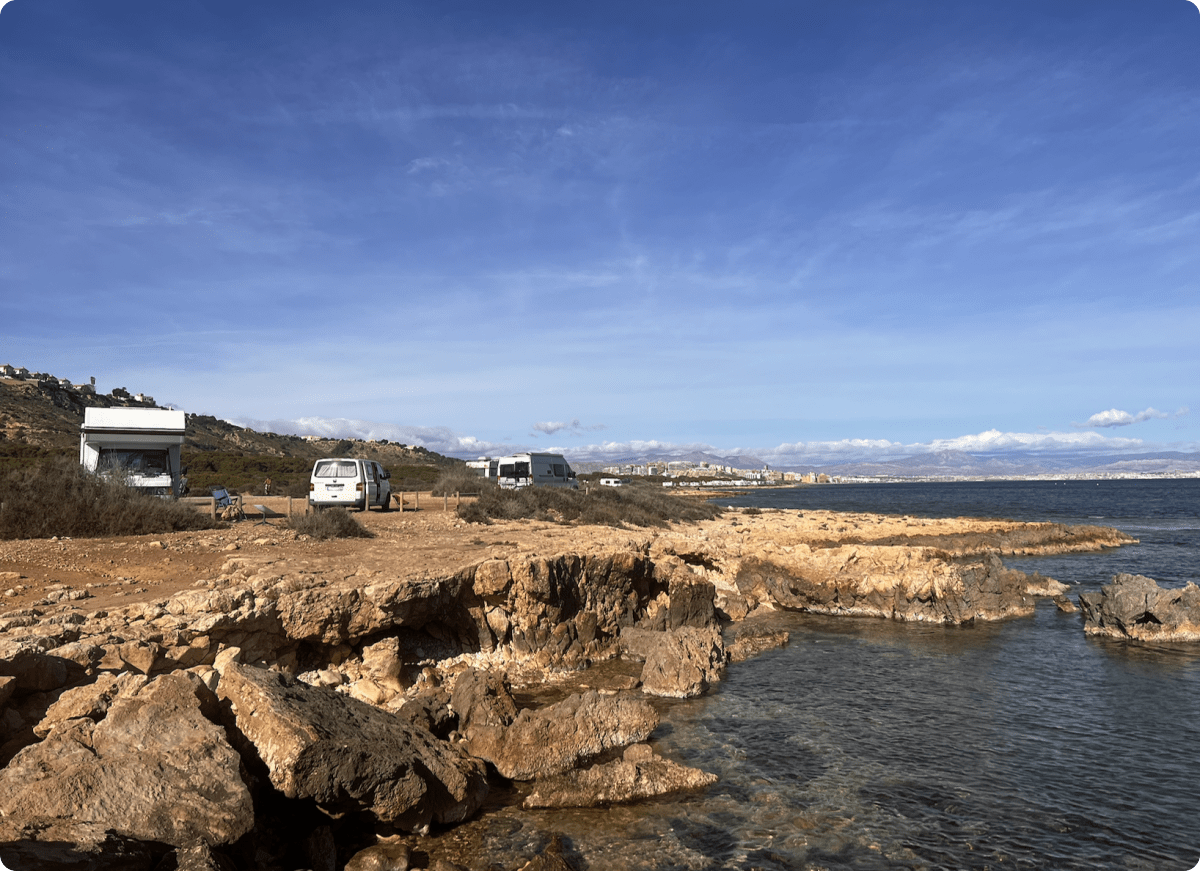
Winter in Spain means T-shirts instead of down jackets, empty beaches and sunsets right outside your sliding door. No wonder more and more vanlifers swap grey northern winters for the Spanish coast every year. But once you arrive, you'll see the same scene at countless beach car parks: a sign with a crossed-out motorhome, and right next to it ten or twenty campers. So is it allowed or not?
The short answer: Officially often prohibited, but in winter it's widely tolerated. In this guide, you'll learn why, where the line is, and how to enjoy a relaxed winter on the coast without getting fined.
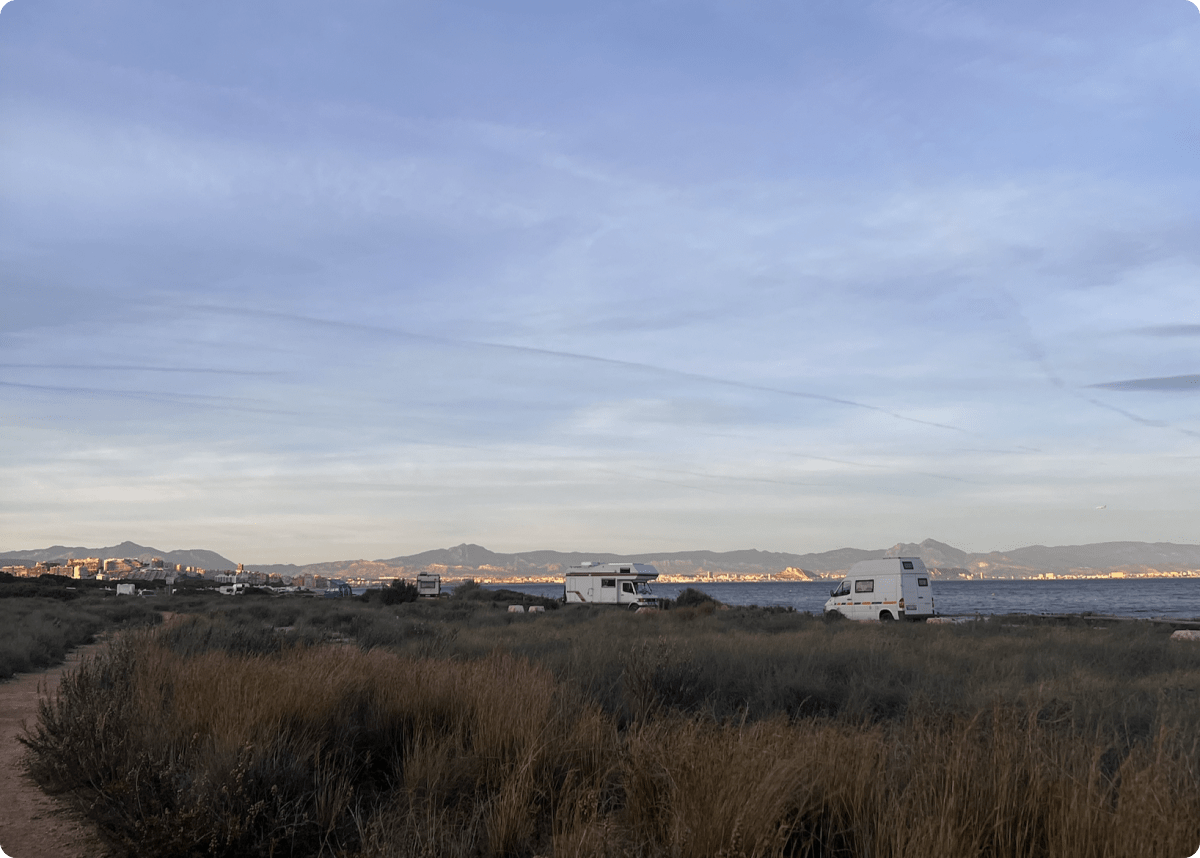
What does "tolerated" actually mean?
"Tolerated" means the rule still applies, but it isn't strictly enforced as long as everyone behaves. Often the police drive past the car park, take a quick look and carry on.
That doesn't mean anything goes, though. The tolerance can end at any time, and then whatever's on the sign applies again.
Why is wild parking so much easier in winter?
It all comes down to the season. In summer, Spain's coast is packed with holidaymakers and locals, and every parking space is in demand. A van taking up two spaces for days on end stands out, and authorities enforce the rules strictly.
In winter, many coastal towns are almost empty. If you park there, you're not taking anyone's spot. That's why authorities often turn a blind eye, as long as things stay clean and quiet. Sometimes fruit or bread vendors even stop by specifically to sell to the campers.
Parking vs. camping: the difference that saves you money
Know this before you set off:
Parking means your van sits there like any other parked car. Spain's traffic authority, the DGT, has made clear that a motorhome may park just like any other vehicle, even with people inside. All that matters is that you follow the normal parking rules.
Camping starts the moment you spread out: awning out, chairs, table, barbecue, levelling blocks under the wheels. Then local camping rules apply, and the fines are much higher than for a simple parking offence.
The rule of thumb is simple: Park, don't camp.
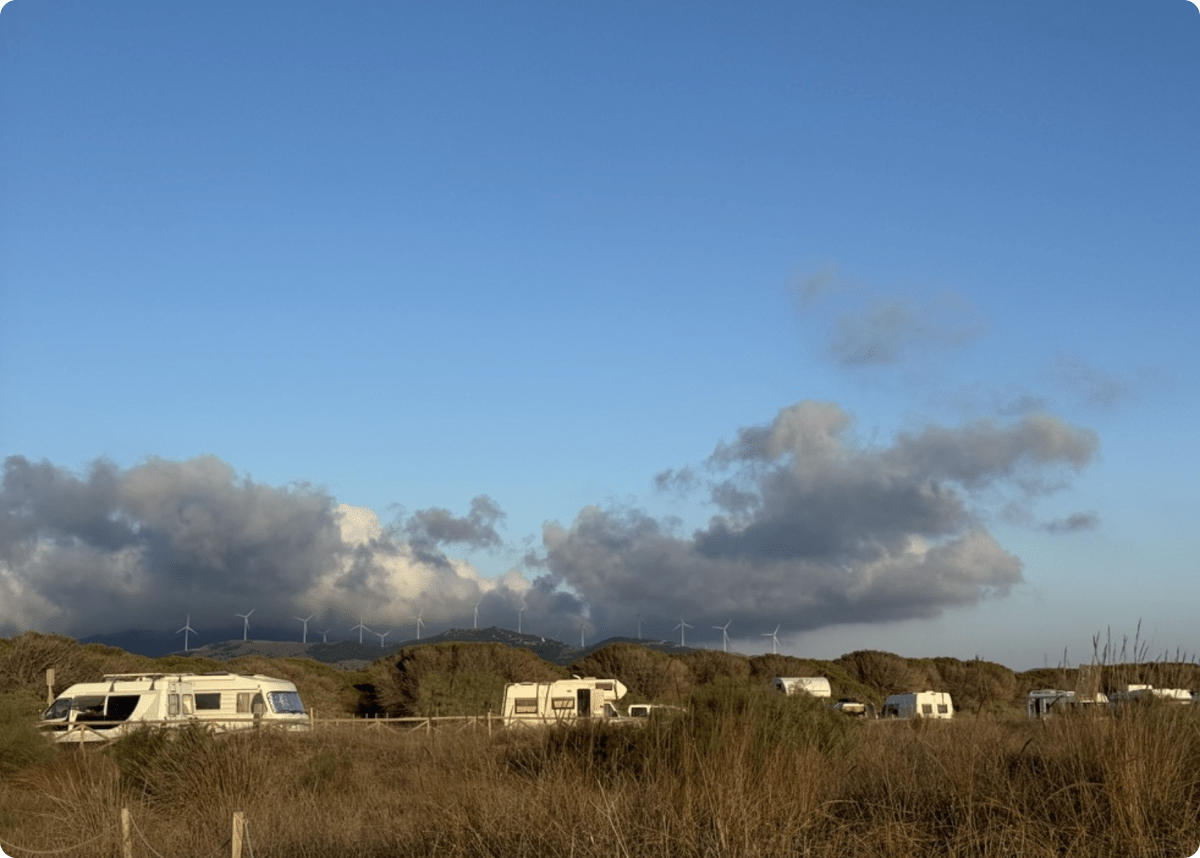
4 unwritten rules for stress-free wild parking
1. Don't overstay
Two, three nights max in one spot, then move on. That way you don't wear out your welcome, and the tolerance lasts longer for everyone.
2. Act like a parked car
Nothing outside, nothing folded out. From the outside, your van should look like any other vehicle in the car park.
3. Ask the others on site
You arrive in the evening, see a "no camping" sign, but also a few other vans? Go and have a chat. How long have they been there? Do the police come by, and how do they react? Within five minutes you'll know whether the spot works for the night.
4. Beach by day, inland by night
Enjoy the day and the sunset by the sea. Then drive a few kilometres inland to your spot for the night. When checks do happen, it's usually the vans in the front row that get targeted.
Insider tip: free municipal motorhome areas
Spain has something you'll rarely find elsewhere on this scale: free motorhome areas run by local councils. Many offer fresh water and grey and black water disposal, and some even have electric hook-ups.
They're usually a little inland, but in return you'll discover small villages you'd otherwise have driven straight past. Perfect for topping up water and emptying the toilet between beach days.
See them in StayFree:
Heads up from Easter: when the tolerance ends
One last, important point: don't push your luck for too long. Around Easter, the Spanish holidays begin, the first tourists return, and checks noticeably increase.
Watch out for these warning signs:
The police don't just drive past, they walk around the car park and look at the vehicles.
Officers note down number plates. If you're still there the next day, you risk a fine.
School holidays and public holidays are coming up.
At that point it's time to move on to campsites, official motorhome areas or quiet spots away from the coast.
Conclusion
Wild parking on the Spanish coast works surprisingly well in winter, as long as you stay respectful and keep it simple. Park rather than camp, move on regularly, listen to the people on site, and remember: from Easter onwards, different rules apply. Then you'll get a winter with a sea view that you could only dream of back home in January.
FAQ
Is wild parking allowed in Spain in winter?
Camping is officially banned in many coastal towns. In winter, though, parking up overnight is often tolerated, as long as you behave like a parked car and don't stay too long.
When do checks get stricter again in Spain?
Usually from Easter, when the holidays start and tourists return.



.png)