
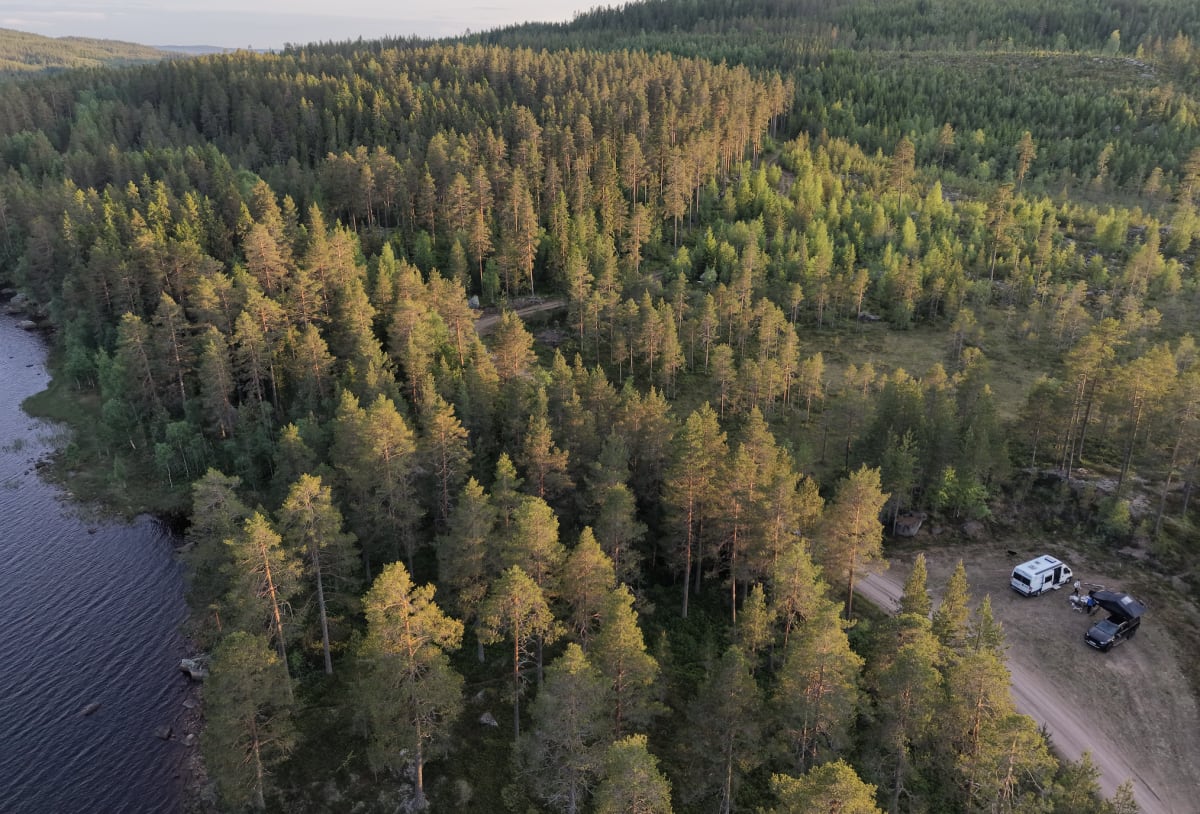
A rooftop tent packing list isn't a bureaucratic exercise. It's the foundation of a good trip - the difference between a relaxed evening by the fire and a stressful one spent searching for the wrong thing. This guide covers three overnight scenarios that feel completely different in practice: a classic campground, a microcamping spot on a farm or vineyard, and fully off-grid free camping with no infrastructure at all.
Why a Rooftop Tent Has Different Requirements Than a Ground Tent or Campervan
You sleep elevated. That has concrete consequences: no direct ground contact means no moisture or cold from below. At the same time, wind at roof height is significantly stronger than at ground level, and the wrong sleeping bag or a mattress that's too thin will directly affect how well you sleep.
The boot becomes your base. Everything you don't need in the tent - cooking gear, clothing, water - lives down at the car. Organisation in the boot isn't a luxury, it's a necessity. Anyone who improvises here will be searching for their headlamp in the dark, which is of course at the very bottom.
The rooftop tent combines maximum flexibility in choosing where to sleep with minimal comfort compromise - provided you have the right things with you.
The Three Overnight Scenarios: What Changes and What Stays the Same
There's no single type of spot for rooftop tent travel. StayFree brings together over 150,000 spots across Europe - from classic campgrounds to private microcamping spots on alpaca farms and vineyards to free-standing spots in nature, with over 50 filters for electricity, showers, dog-friendliness and more. That variety is great, but it puts different demands on your gear.
Campground: Use the Infrastructure, Enjoy the Comfort
Electricity, running water, sanitation facilities - on a classic campground most things are taken care of. The packing list gets lighter: the water canister stays small, you can skip the solar panel. Worth checking in advance: whether rooftop tents are explicitly allowed, since not every campground has enough space for vehicles with a raised setup.
Rooftop tents and motorhome pitches - what you need to know
Motorhome pitches are not automatically an option for rooftop tent travelers. Many have height restrictions at the entrance, and an assembled rooftop tent with the ladder extended takes up more lateral space than a standard vehicle. Some operators explicitly don't allow rooftop tents.
Before heading to any motorhome pitch: either check directly with the operator or read the community reviews in StayFree - it's often mentioned there whether rooftop tents are welcome or not.
As a rule of thumb: campgrounds are usually rooftop tent-friendly. Microcamping spots almost always are. Dedicated motorhome pitches - ask first.
Microcamping: The Best of Both Worlds
Microcamping spots are private pitches at farms, vineyards, and family-run properties - you can find them directly through StayFree. They're generally cheaper than classic campgrounds but have less infrastructure. Electricity is sometimes available, running water often not. On the other hand, they're more idyllic, quieter, and often the places you remember most vividly at the end of a trip.
What you additionally need: enough water supply, a powerbank or small solar panel, and respect for the host - leave the site as you found it - you can mark your clean-up in StayFree.
Free / Wild Camping: Maximum Freedom, Maximum Responsibility
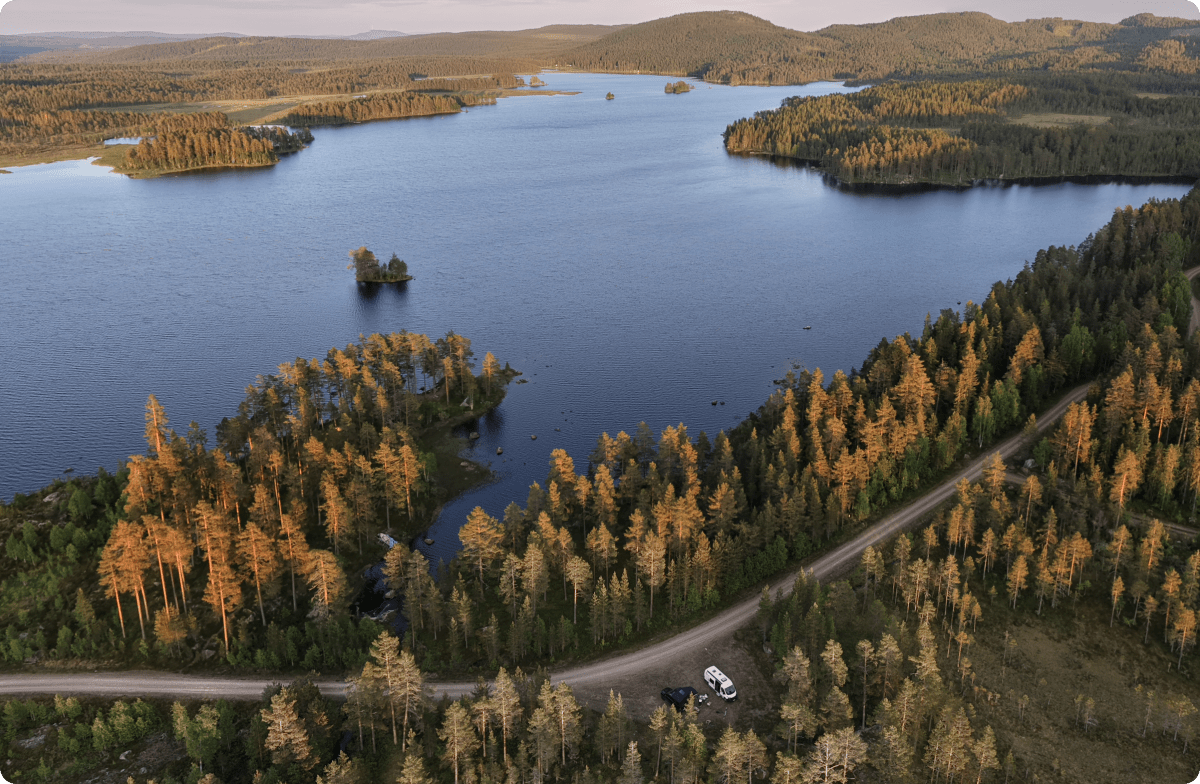
Free camping with a rooftop tent is a different situation than sleeping in a campervan - and that distinction matters legally. In most European countries, sleeping in your car is generally tolerated as long as it serves the purpose of rest. The moment you open a rooftop tent, however, it automatically counts as camping. That changes things.
There's no country in Europe where this is completely straightforward. Germany, Austria, France, the Netherlands - everywhere it's a grey area. Technically camping outside designated areas is prohibited in most places. In practice, enforcement depends heavily on where you park, how discreet you are, and how long you stay. A remote forest track at midnight is a different situation than a busy beach car park on a Saturday in August.
A few principles that make free camping with a rooftop tent work in practice:
Location is everything. The more remote, the fewer problems. If you have a 4x4, you can access tracks and terrain that a regular car can't reach - and that distance from populated areas is often the difference between a peaceful night and a knock on the window at 2am. On public car parks, lay-bys and roadside spots, the risk of being moved on is real, especially in tourist areas.
Don't take up more space than you need. A rooftop tent with a ladder and a tarp extended sideways can occupy the space of two normal parking spots. In areas where locals also need to park, that creates friction — and friction creates problems. Keep your footprint small, park considerately, and if a spot is clearly not designed for overnight use, move on.
Safety comes first. Before you set up, ask yourself whether you feel comfortable in that spot - not just legally, but physically. Is the area well-known, are there other travelers around, does the location feel right? Trust that instinct. A rooftop tent means you're visible, elevated, and committed once the ladder is down. Choose spots where you feel genuinely relaxed, because that's the only way you'll actually sleep.
Leave no trace. No rubbish, no damage, no campfire outside a designated fire pit. The reason free camping works at all in many areas is that enough people have treated spots with respect. One bad actor closes a location for everyone.
The Sleep System: Where Half the Night Is Won or Lost
Choose a sleeping bag whose comfort temperature is at least five degrees below the expected overnight low. At roof height it's windier and therefore feels colder than at ground level. For Central Europe in summer a three-season bag is sufficient; for Scandinavia, one rated to minus five degrees comfort is the better choice. A thin fleece liner costs almost nothing, weighs almost nothing, and doubles the temperature tolerance of the whole system.
Compact camping pillows are now good enough that there's no reason to roll up a towel. And earplugs - on a busy campground, a lively microcamping spot, or an urban parking area, they can be the difference between a good night and a poor one.
The Kitchen
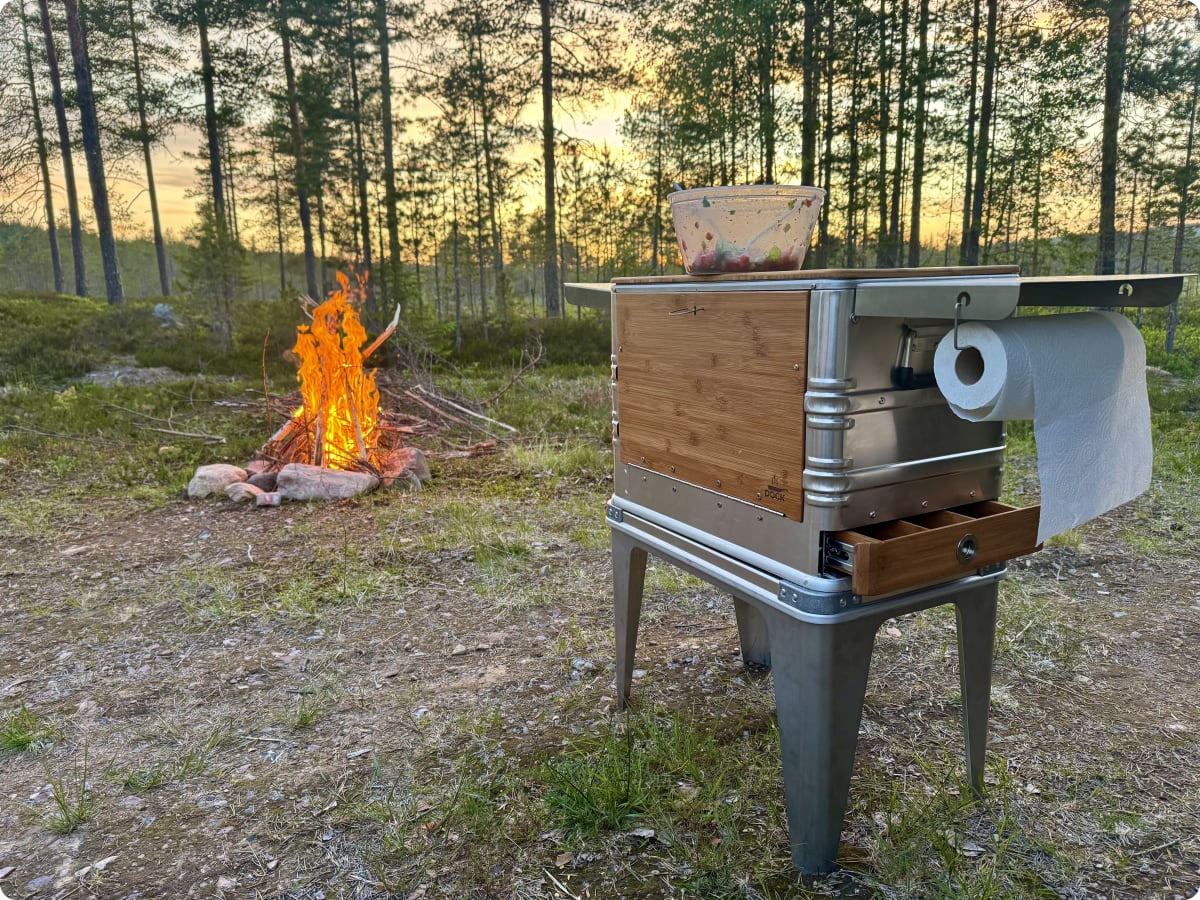
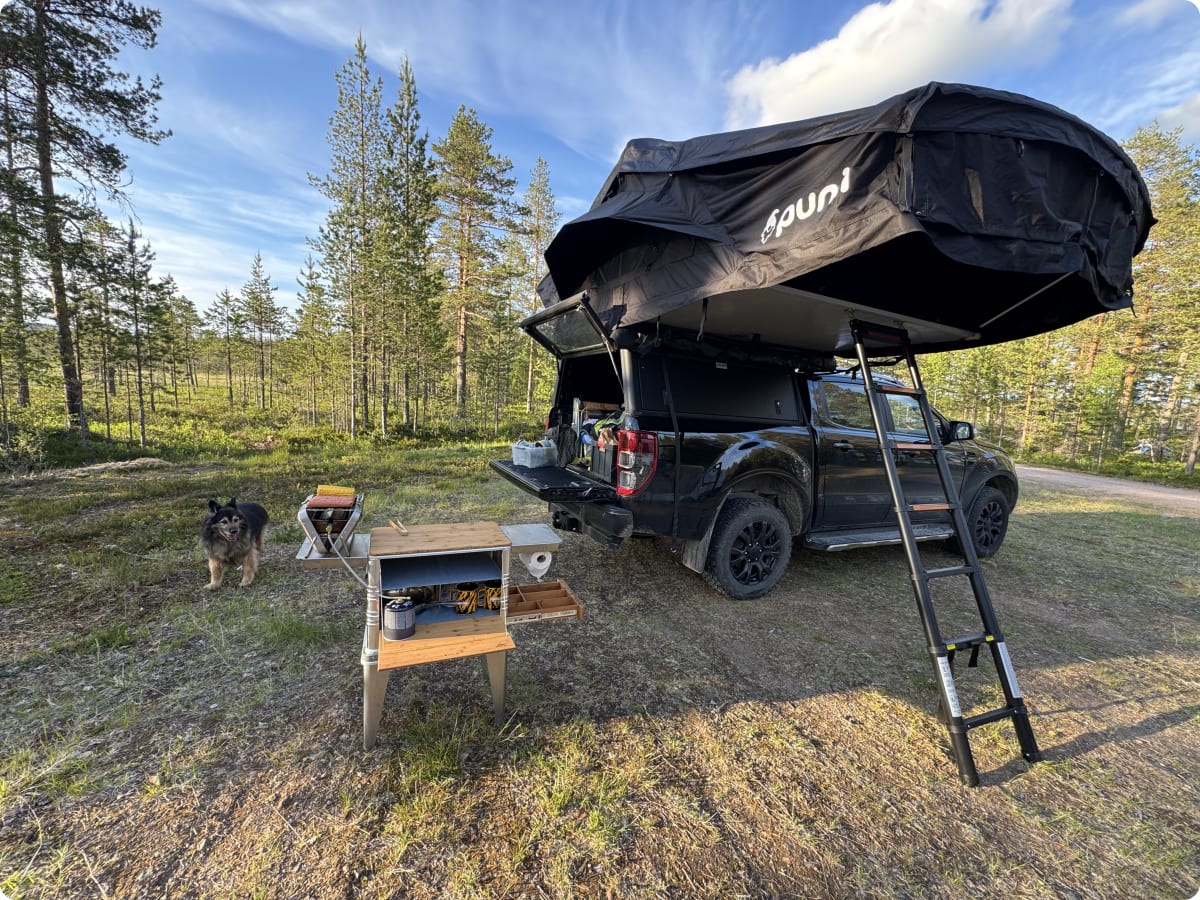
The best part of rooftop tent camping is the first coffee of the morning. Climb down the ladder, light the stove, look at the landscape. For that you need a functioning outdoor kitchen. We, Anna and Ben from StayFree are travelling travelling with the compact Field Kitchen from Dock Outdoors, with it cooking outside has become a genuine experience rather than a workaround.
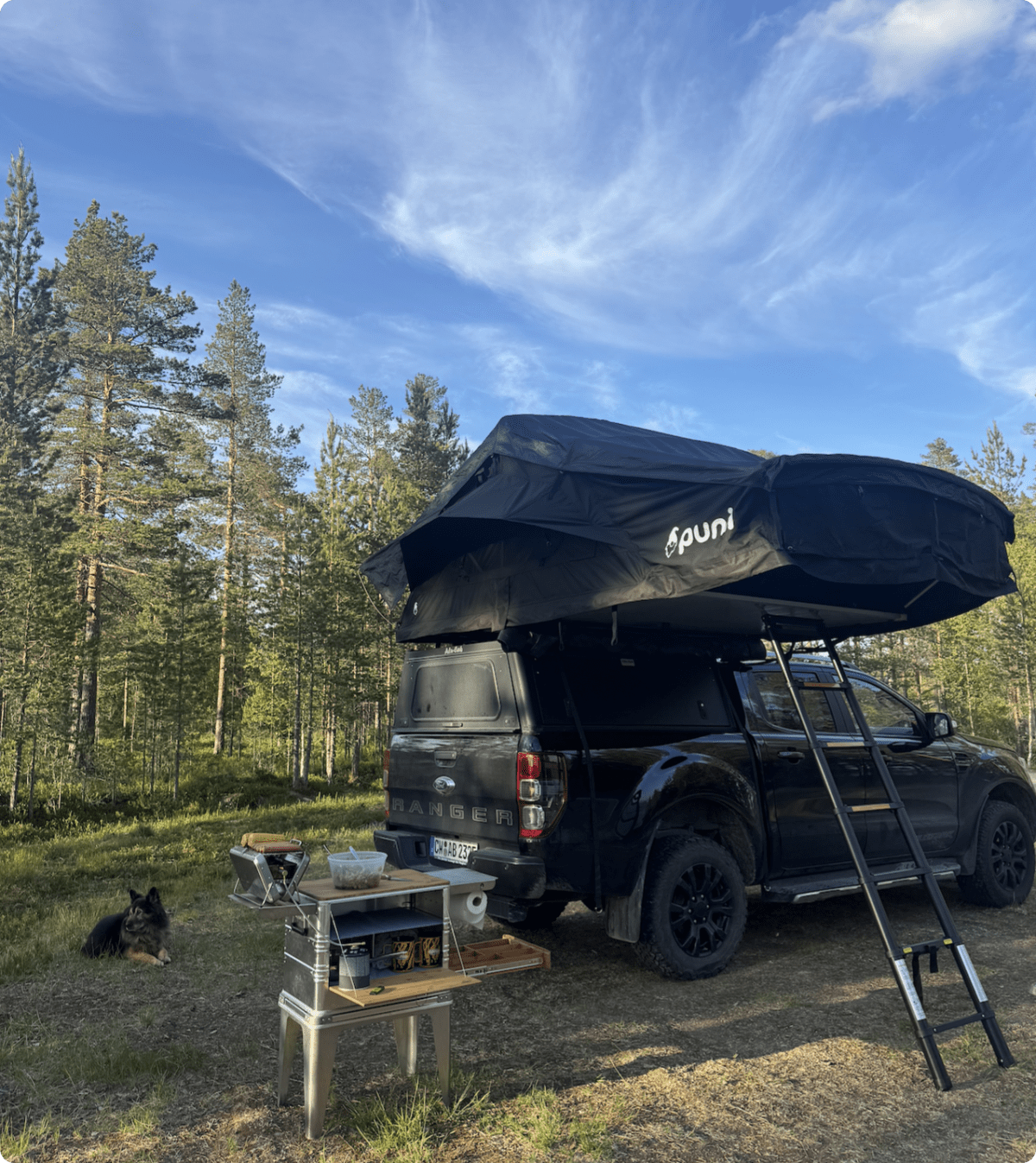
What to pack separately: biodegradable washing-up liquid, a folding bowl for washing up, kitchen roll, two lighters, and gas canisters for the stove. And yes: the corkscrew. Always.
What to adjust per spot: on campgrounds with a washing-up station, the minimum is enough. When free camping or on simpler microcamping spots, the folding bowl is your sink and a ten to fifteen litre water canister gives you the independence you need. A windshield is also worth thinking about.
Water: The Underestimated Resource
At least three litres per person per day for drinking and cooking. More in heat. Another two litres for hygiene. Standard on campgrounds, sometimes available on microcamping spots, completely self-supplied when free camping.
A collapsible water canister with ten to twenty litres saves space when empty. One drinking bottle per person. Water purification tablets as backup. In Scandinavia, stream water is often directly drinkable - a small camping filter doesn't hurt regardless.
Clothing: Layering Beats Volume
There's no room for a large suitcase in a rooftop tent boot. The layering principle isn't a philosophy here, it's a necessity.
The base layer regulates temperature and moves moisture away from the body: merino wool or polyester, two sets are enough for a week. The mid layer provides warmth: a fleece pullover plus a lightweight down jacket, packed together barely bigger than a mug. The outer layer protects: a hardshell jacket, waterproof and windproof, belongs on every rooftop tent trip regardless of the forecast. A beanie and thin gloves are regularly underestimated - even in summer, when nights at roof height are colder than expected.
Sanitation: The Most Honest Question of the Trip
Campgrounds have toilets. Microcamping spots often do too, sometimes as a simple outdoor toilet. When free camping, you're on your own - and that's completely fine if you're prepared.
A small folding trowel belongs in every boot that has ever ended up at a free camping spot. The rule: at least 50 metres from any water source, dig a hole around 15–20cm deep, cover it afterwards. Sounds like survivalism, in practice it's completely normal.
For more comfort: a folding camping toilet with disposable bags is lighter than it sounds, takes up little space, and makes multi-night free camping considerably more relaxed.
For washing: a black solar shower bag with ten to twenty litres, filled in the morning and left in the sun, gives you a comfortably warm shower in the evening. Hang it from a branch or the roof rack, done.
First Aid Kit
Painkillers, plasters in various sizes, blister plasters, wound disinfectant, charcoal tablets, antihistamines, tick tweezers, emergency foil, compression bandage, sunscreen SPF 30+, insect repellent. Tick protection is regularly underestimated - particularly in Germany and Central Europe where TBE and Lyme disease are common.
Tech and Power
Two powerbanks with at least 10,000mAh each - one for daily use, one as reserve. Charging cables for all devices, a car charger adapter, a headlamp with red light mode, a torch as backup. The Punii moenga has integrated LED lighting via USB - useful for reading in the tent in the evening without sacrificing phone battery.
A Kindle or a physical book also belongs in the bag. Not because the phone would run out of power, but because an hour of reading in the tent while it lightly rains outside is one of the best moments a trip can offer.
For longer tours or frequent free camping: a solar mat with sixty to one hundred watts, laid out on the roof rack or on the ground during the day, fills the powerbanks by evening.
Comfort: What Makes the Evening Memorable
One good camping chair per person. Two lightweight folding chairs are the difference between an evening on the ground and an evening spent relaxed watching the stars. A small folding table makes the Dock Outdoors Kitchen even more practical - as extra prep space, as a dining table, as a surface for everything that shouldn't go on the ground.
A tarp or awning creates a sheltered living area below the tent. In rain, in sun, in the evening while cooking: the tarp is what turns a parking spot into a home.
And the fairy lights. A small battery-powered string of lights strung between the car and the tarp. Not necessary. Just genuinely nice - and in every photo, the best part of the evening.



.png)